
What Is Lawn Core Aeration?
Core aeration is the process of removing small plugs of soil from your lawn to reduce compaction and improve the flow of air, water, and nutrients down to the root zone. Unlike spike aeration, which simply pokes holes, core aeration physically extracts material — giving roots genuine room to expand.
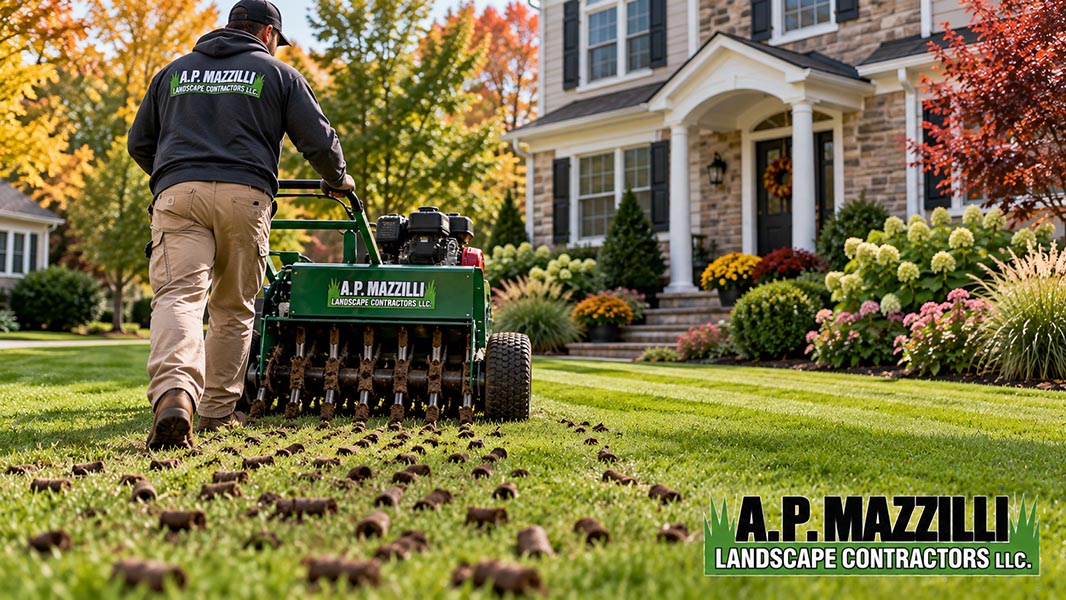
The pulled plugs are left on the surface, where they break down naturally within a few weeks, returning organic matter and beneficial microbes to the soil.
Why Compacted Soil Hurts Your Lawn
Over time, foot traffic, heavy equipment, and rainfall pack soil particles tightly together. Compacted soil suffocates grassroots by blocking the movement of oxygen and water.
Signs your lawn may need aeration include:
Water pooling on the surface after rain
Grass that feels spongy or thin despite regular watering
Soil that is hard to penetrate with a screwdriver
Heavy thatch buildup (more than half an inch thick)
Lawn that dries out quickly even in mild weather
How Core Aeration Works
A core aerator — either walk-behind or tow-behind — uses hollow tines to punch into the ground at regular intervals, pulling out cores of soil roughly 2–3 inches deep and half an inch in diameter. The depth and spacing of those holes determine how effectively the soil is relieved of compaction.
For best results, the soil should be moist but not waterlogged before aeration. Running a sprinkler the evening before gives the tines maximum penetration depth.
When to Aerate Your Lawn
Timing depends on your grass type. Aerating during a period of active growth allows the turf to recover quickly and fill the holes with new root development.
Cool-season grasses (Kentucky bluegrass, tall fescue, ryegrass): Aerate in early fall or early spring.
Warm-season grasses (Bermuda, zoysia, St. Augustine): Aerate in late spring through early summer.
Avoid aerating during drought stress or extreme heat, when the lawn is already struggling to survive.
The Benefits of Regular Core Aeration
Done on a consistent schedule — typically once a year for high-traffic lawns, every other year for low-traffic areas — core aeration delivers measurable results.
Deeper, more drought-resistant root systems
Improved fertilizer uptake (nutrients reach roots instead of running off)
Faster water absorption, reducing runoff and erosion
Thicker, denser turf that crowds out weeds
Reduced thatch accumulation over time
Core Aeration vs. Spike Aeration
Spike aerators push solid tines into the soil, which can actually increase compaction around each hole. Core aeration removes material rather than displacing it, making it the preferred method recommended by turf professionals and university extension programs alike.
For lawns with significant compaction issues, spike aeration is generally considered a short-term fix at best.
What to Do After Aeration
The days immediately following aeration are the most valuable window for lawn improvement. The open channels allow amendments to reach the root zone far more effectively than on an untreated lawn.
Overseed: Grass seed dropped into aeration holes has dramatically higher germination rates than seed spread on compacted turf.
Fertilize: Apply a slow-release fertilizer to feed roots through the recovery period.
Top-dress: A light layer of compost smoothed across the surface improves soil structure over the following months.
Water: Keep the lawn consistently moist for at least two weeks to support both recovery and new seed germination.
How Often Should You Aerate?
Most residential lawns benefit from aeration once per year. Lawns that see heavy use — sports fields, yards with children or pets, or properties with clay-heavy soil — may benefit from two sessions annually.
Sandy soils compact less readily and may only need aeration every two to three years, provided the lawn remains healthy and drains well.
Frequently Asked Questions
Will aeration damage my lawn?
No. The lawn may look slightly rough for a week or two while the plugs decompose, but the turf recovers quickly — especially when aeration is timed during active growth periods.
Should I mow before or after aeration?
Mow slightly shorter than usual before aerating so the tines can penetrate fully. After aeration, wait until the lawn has visibly recovered — typically two to four weeks — before mowing again.
Can I aerate a newly seeded lawn?
Wait until a newly seeded lawn has been mowed at least three times before aerating. Aerating too early can disturb germinating seed and damage shallow root systems.
Is professional aeration worth it?
For most homeowners, hiring a lawn care professional ensures the correct equipment, proper depth, and correct timing — all of which significantly affect results. Rental aerators are available, but commercial-grade machines typically outperform consumer models in compacted conditions.