
Best Landscaping for Westfield's Older Colonial-Style Homes
If you live in one of Westfield's beautiful Colonial-style homes, you already know that curb appeal matters. These classic properties — many of them built between the 1920s and 1970s — carry a timeless architectural dignity that deserves landscaping to match. The right plantings, pathways, and garden design can honor the history of your home while making it the standout property on the street.
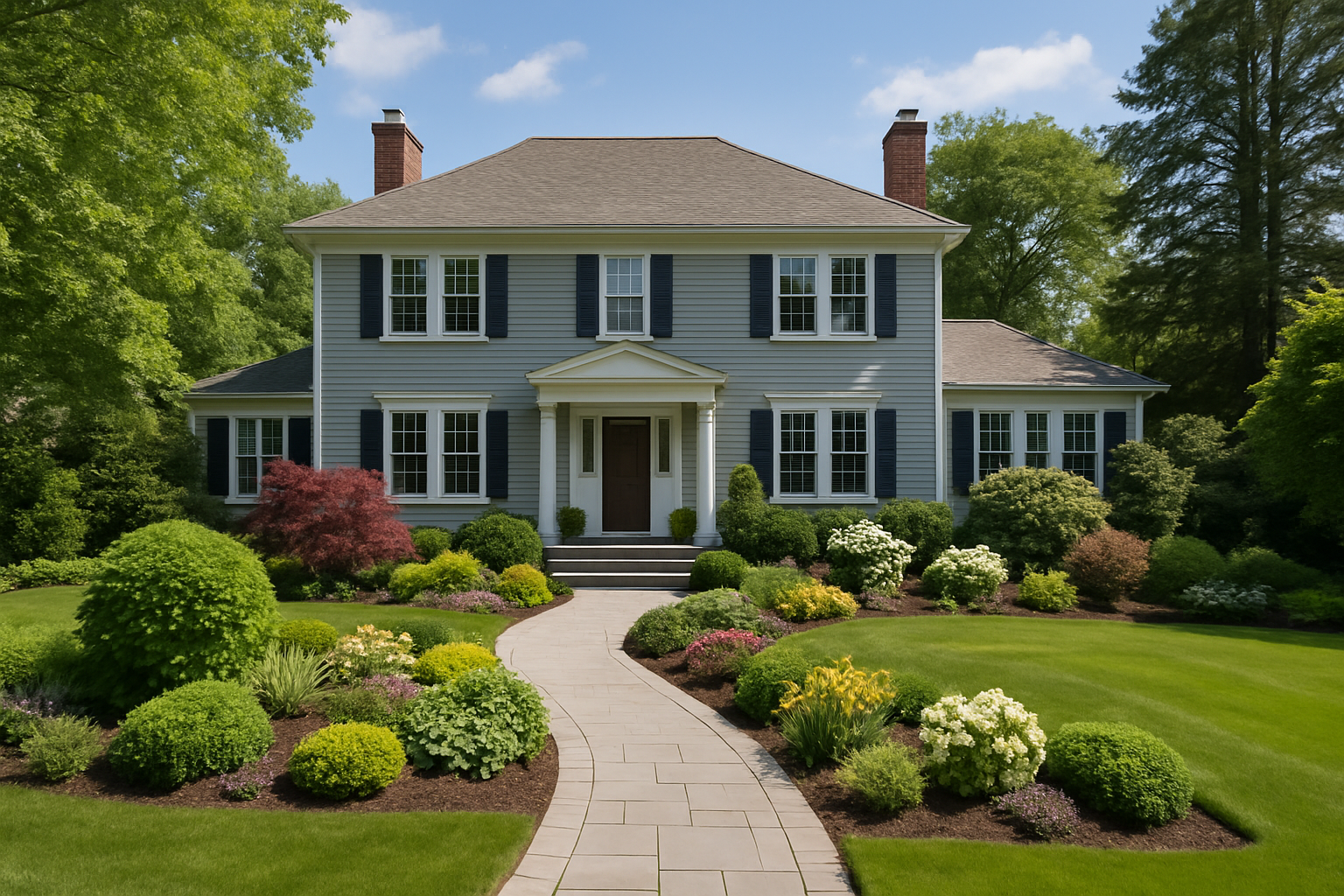
But what exactly works for a Colonial? And what should you avoid? Here's everything you need to know about landscaping that genuinely complements Westfield's older Colonial-style homes.
---
Why Colonial Homes Demand a Specific Landscaping Approach
Colonial architecture is defined by symmetry, structure, and simplicity. The classic center-hall layout, evenly spaced windows, and formal front entrance all signal a style that values order and balance. Landscaping that feels too wild, too tropical, or too modern can actually work against the home's natural charm.
Getting it right means thinking about proportion, formality, and plant choices that feel period-appropriate — while still being practical for a modern Westfield homeowner.
---
Start With Symmetry: The Foundation of Colonial Landscaping
The single most important principle when landscaping a Colonial home is symmetry. If you plant a flowering shrub on the left side of your front path, mirror it on the right. Balanced plantings on either side of the front door immediately signal that the landscaping was designed with intention.
Simple symmetrical approaches that work well include:
Matching boxwood hedges flanking the front entrance
Identical flowering trees on either side of the driveway
Evenly spaced foundation plantings running across the front of the home
Paired container plantings on either side of the front steps
This doesn't mean everything has to be perfectly rigid. It means the eye should feel a sense of calm balance when looking at the front of the house.
---
Best Plants for Westfield's Colonial-Style Homes
Westfield sits in USDA Hardiness Zone 6b, which gives homeowners a solid range of plant options. Choosing plants that would have historically grown in this region adds an authentic character to older Colonial properties.
Evergreen Shrubs
Evergreens provide year-round structure — essential for maintaining that formal Colonial look even in the middle of winter.
**Boxwood (Buxus)** — The classic Colonial choice. It takes well to shaping and maintains clean lines.
**American Holly (Ilex opaca)** — Native, formal-looking, and stunning in winter with its red berries.
**Inkberry Holly (Ilex glabra)** — A native alternative to boxwood with a tidy, rounded habit.
**Arborvitae** — Excellent as a privacy screen or to anchor corners of the home.
Flowering Shrubs
Color and seasonal interest keep Colonial gardens from feeling stiff or overly formal.
**Mountain Laurel (Kalmia latifolia)** — Native to New Jersey and historically appropriate
**Hydrangea** — Particularly smooth hydrangeas (Annabelle) or panicle hydrangeas for formal borders
**Lilac** — Deeply rooted in Colonial American gardens and beloved in the Northeast
**Rhododendron** — Provides bold spring color and evergreen presence year-round
Perennials and Ground Covers
Hostas work beautifully in shaded areas under large Colonial oaks or maples
Black-eyed Susans add late-summer color with a native, naturalistic feel
Pachysandra makes an excellent ground cover under foundation shrubs
Astilbe softens shaded corners without looking out of place
Trees
Many of Westfield's older Colonial homes already have large, mature trees — a genuine asset. If you're adding trees, choose species that feel in keeping with the neighborhood's character:
Red Maple or Sugar Maple for canopy and fall color
Dogwood for a formal, smaller flowering tree near the entrance
Serviceberry for spring blooms and multi-season interest
Crabapple varieties for symmetrical placement near the driveway
---
Hardscape That Complements Colonial Architecture
Plantings are only half the story. The hardscape — paths, walls, edging, and borders — plays a massive role in tying the whole look together.
Front Walkways
A straight, centered front path is the most authentic choice for a Colonial home. Curved paths tend to feel more cottage-style or naturalistic and can undercut the formal character of the architecture.
Great materials for Colonial walkways include:
**Brick** — The most historically appropriate option and a beautiful match for brick Colonial exteriors
**Bluestone** — A classic Northeast material with a formal, clean appearance
**Flagstone** — Works well for a slightly softer, garden-style feel while still maintaining structure
Avoid overly decorative stamped concrete or modern pavers with contemporary profiles — they tend to clash with the period character of older Colonial homes.
Garden Edging and Borders
Defined, crisp edges along garden beds reinforce the structured aesthetic Colonial homes call for. Steel edging, brick edging, or simple cut edges maintained throughout the season all work well. Loose, undefined beds can make even a well-planted garden look unintentional.
Low Stone Walls and Fencing
Dry-stacked stone walls are a beautiful and historically resonant addition to Colonial properties. If your home sits on a sloped lot — common in parts of Westfield — a low stone retaining wall can solve a functional problem while adding character.
Fencing options that suit Colonial homes include:
Classic white picket fences for front yards
Split-rail fencing for more informal side or back yard areas
Black or dark green wrought iron for a more formal, upscale look
---
Dealing With Mature Trees and Established Plantings
One of the realities of landscaping older homes is working around what's already there. Many Westfield Colonial properties have decades-old oaks, maples, or Norway spruces that define the entire yard.
Rather than fighting these trees, design around them. Create defined shade beds beneath large canopies with shade-tolerant plantings like hostas, astilbe, and ferns. Use mulch rings to protect surface roots and give the garden a clean, intentional appearance.
If older foundation shrubs have become overgrown — a very common issue with older Colonials — consider whether they can be renovated through hard pruning or whether replacement is a better option. Overgrown yews, for example, can often be cut back dramatically and will regenerate beautifully.
---
Seasonal Color Without Losing the Formal Character
A common mistake is overloading a Colonial garden with too many colors and textures in the name of seasonal interest. The key is restraint.
Choose one or two accent colors and stick with them. White and deep green is a timeless Colonial palette. Soft blues and purples work beautifully with brick exteriors. Avoid mixing too many competing flower colors in formal front beds.
For seasonal interest without visual chaos:
Plant spring bulbs (tulips, daffodils) in drifts rather than scattered randomly
Use annuals as a single consistent color in defined containers or window boxes
Let your foundation evergreens carry the visual weight through summer and winter
---
Window Boxes: A Small Detail That Makes a Big Difference
If your Colonial home has the right window proportions — and many in Westfield do — window boxes can be a remarkably effective finishing touch. They add color, soften the facade, and connect the architecture to the garden.
Keep window box plantings simple and symmetrical. A classic combination might be white geraniums, trailing ivy, and a single upright spike plant repeated across every box. Avoid anything that looks too tropical or overly casual.
---
Common Landscaping Mistakes on Colonial Homes
Even well-intentioned landscaping can undermine a Colonial home's character. Watch out for these frequent missteps:
**Overgrown foundation plantings** that obscure windows and the front entry
**Asymmetrical layouts** that fight against the home's natural balance
**Trendy plant choices** that feel out of period (think ornamental grasses en masse or tropical-style plantings)
**Curved beds against the house** that contradict the home's linear architecture
**Ignoring scale** — small shrubs against a tall two-story facade look lost; choose plants that will reach an appropriate mature height
---
Working With Westfield's Neighborhood Character
Westfield's established neighborhoods have a cohesive visual quality that's worth respecting. Landscaping choices that feel dramatically out of step with neighboring properties can actually reduce curb appeal rather than enhance it.
That doesn't mean you can't be creative. It means letting the architecture lead and choosing plants and materials that feel like a natural extension of both your home and the neighborhood.
Many of Westfield's older Colonial streets look their best in May and June, when flowering trees and shrubs are at their peak. Designing your landscape to contribute to — and even enhance — that shared seasonal beauty is a goal worth pursuing.
---
When to Call a Professional Landscaper
Some Colonial landscape projects are well within the reach of a motivated homeowner. Planting symmetrical shrubs, adding window boxes, and edging beds are all manageable DIY tasks.
But for larger projects — regrading a lawn, installing stone walls, removing mature trees, or designing a comprehensive landscape plan — working with a local professional who understands both Westfield's soil and climate conditions and the specific demands of Colonial architecture is well worth the investment.
A good landscape designer will help you avoid costly mistakes and create a plan that enhances your home's value and character for years to come.
---
Final Thoughts
Westfield's older Colonial-style homes are among the most architecturally rewarding properties in Union County. The right landscaping doesn't just improve curb appeal — it completes the picture the house itself is trying to paint.
Start with symmetry. Choose plants with structure and seasonal interest. Use hardscape materials that feel period-appropriate. And above all, let the architecture guide every decision you make.
Done well, the landscape and the home become a single, unified statement — and that's exactly what these classic properties deserve.